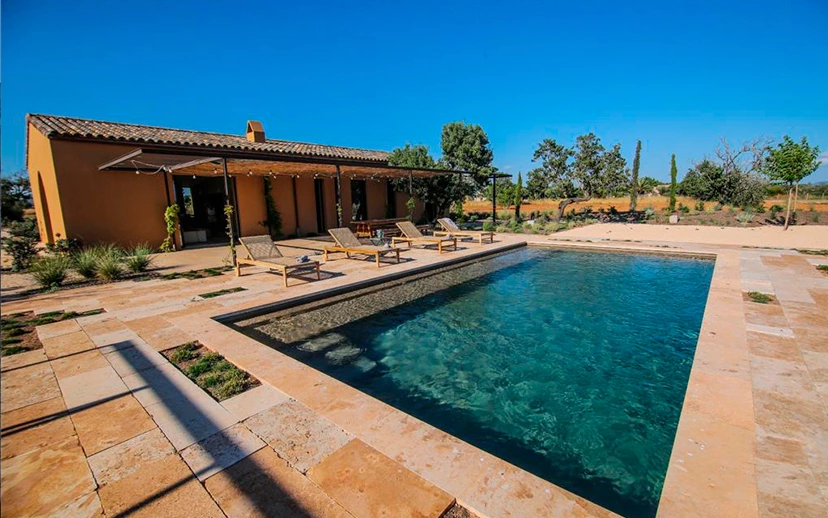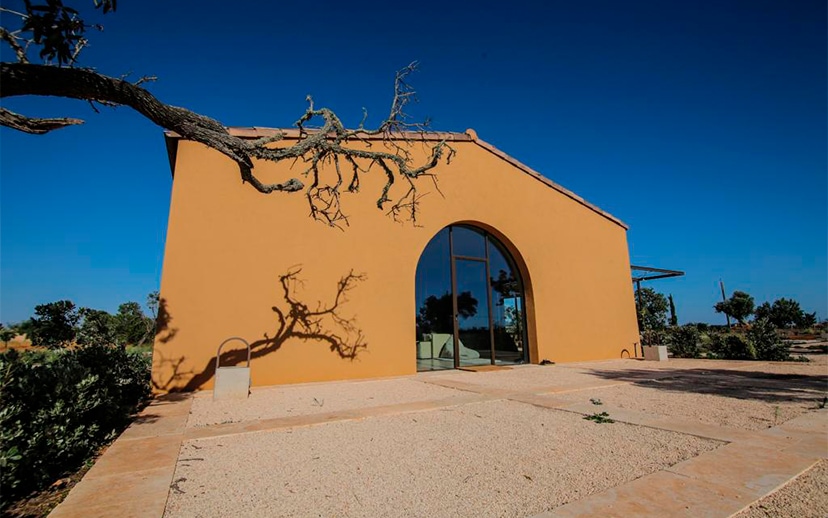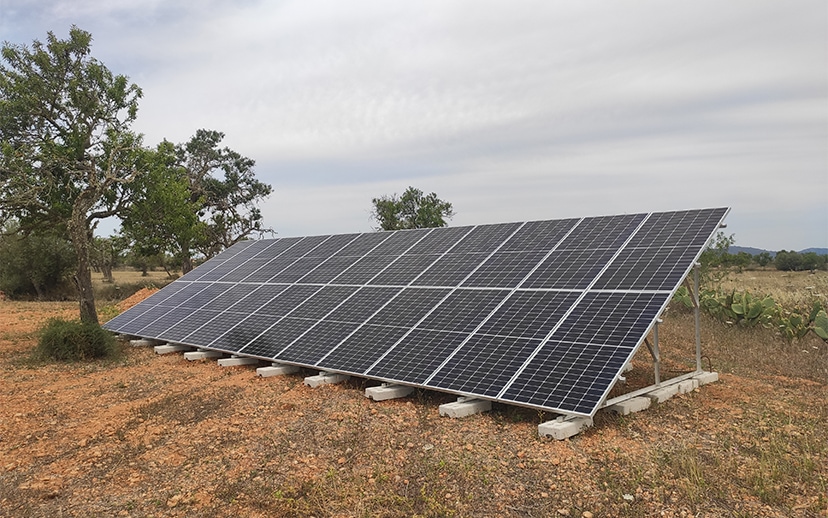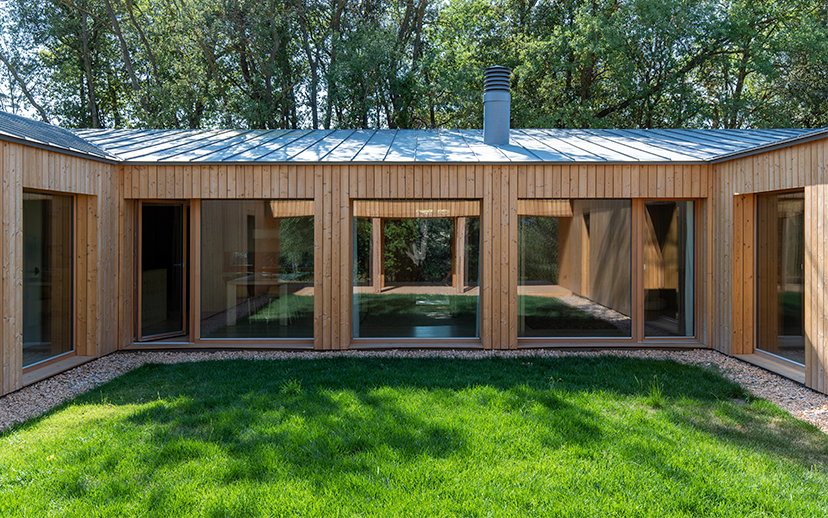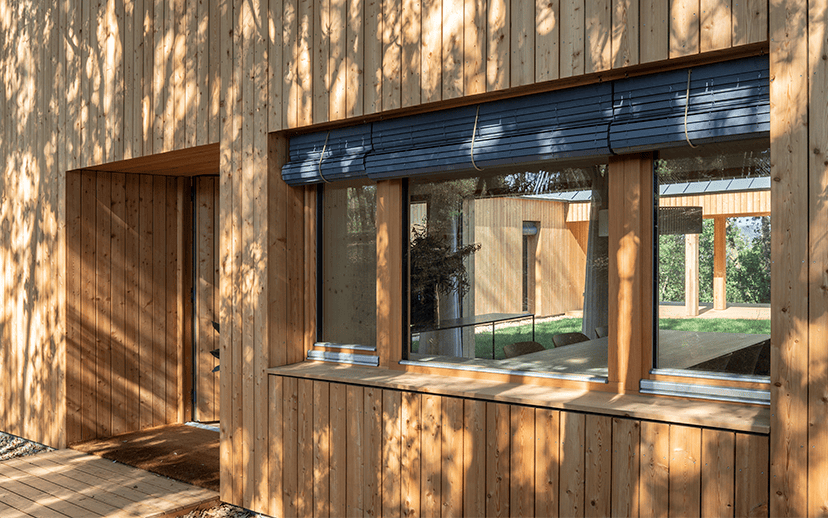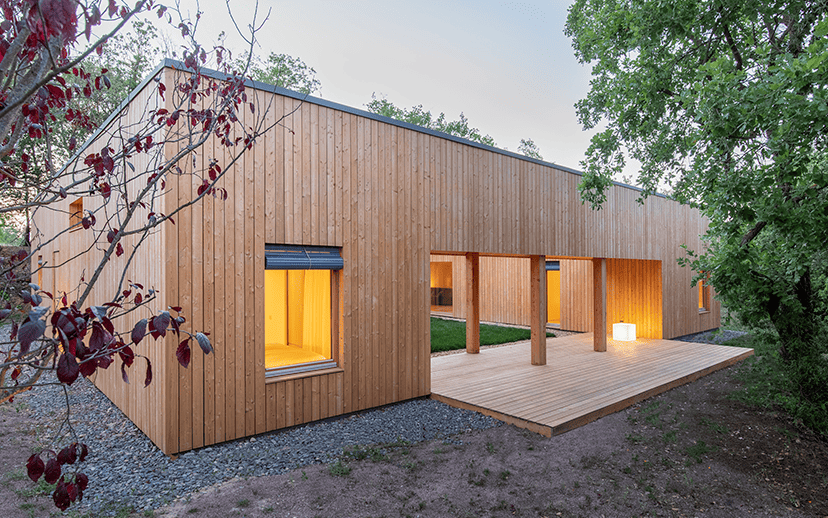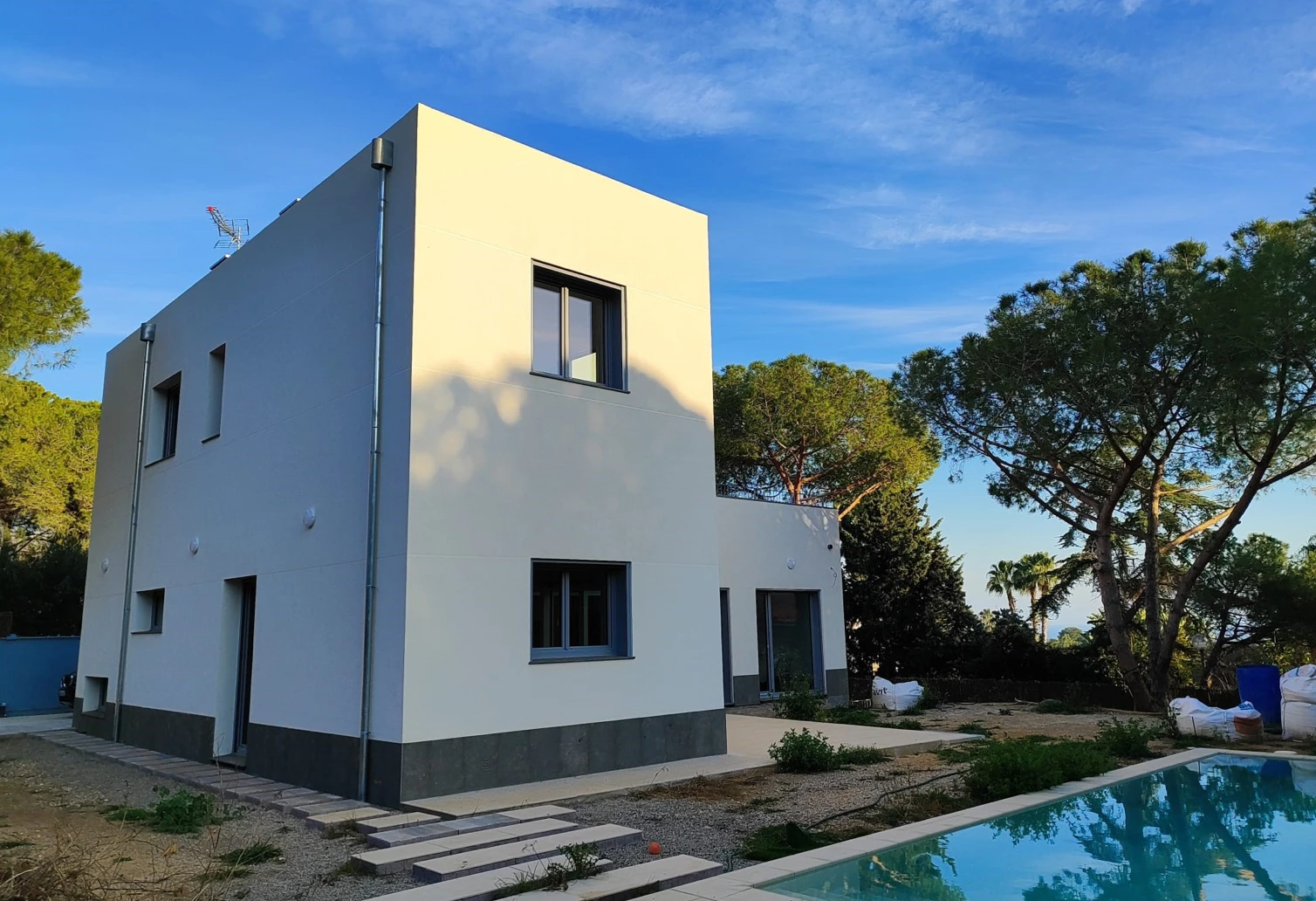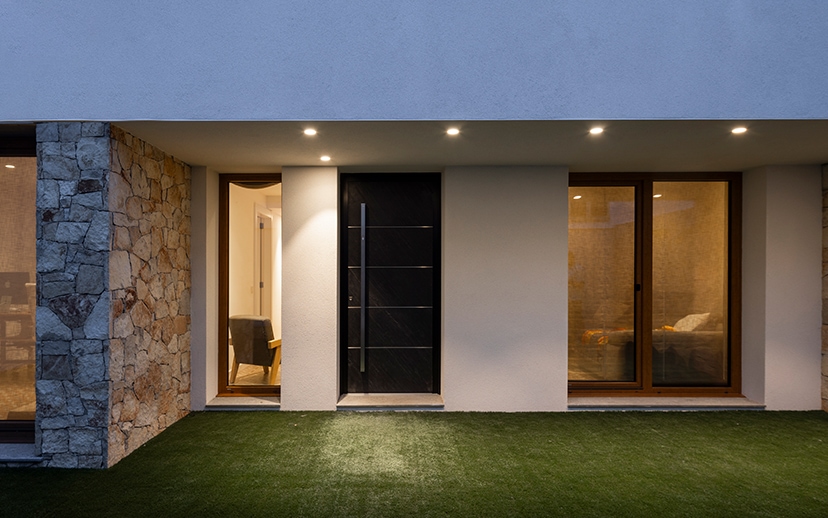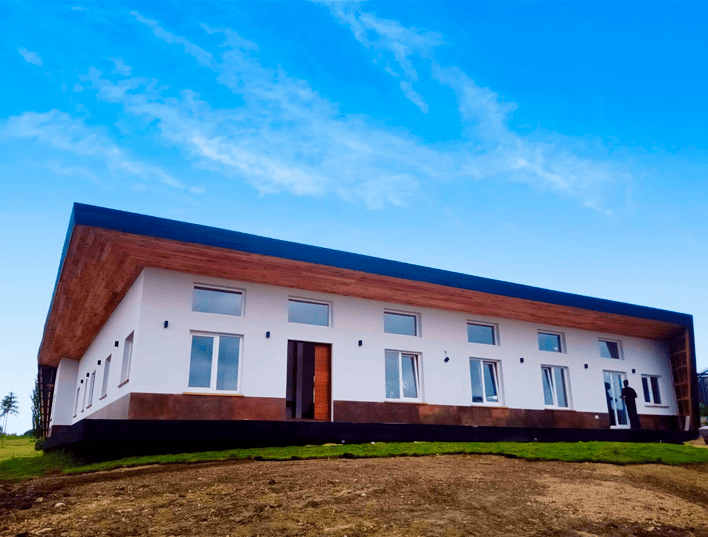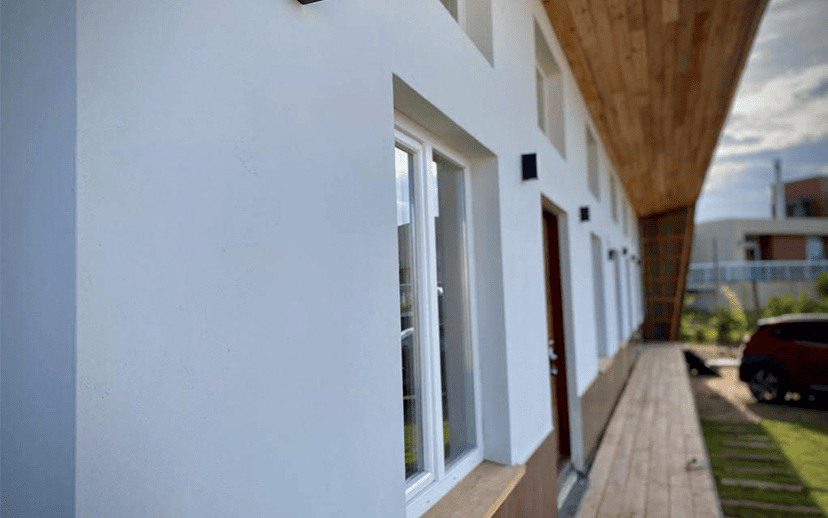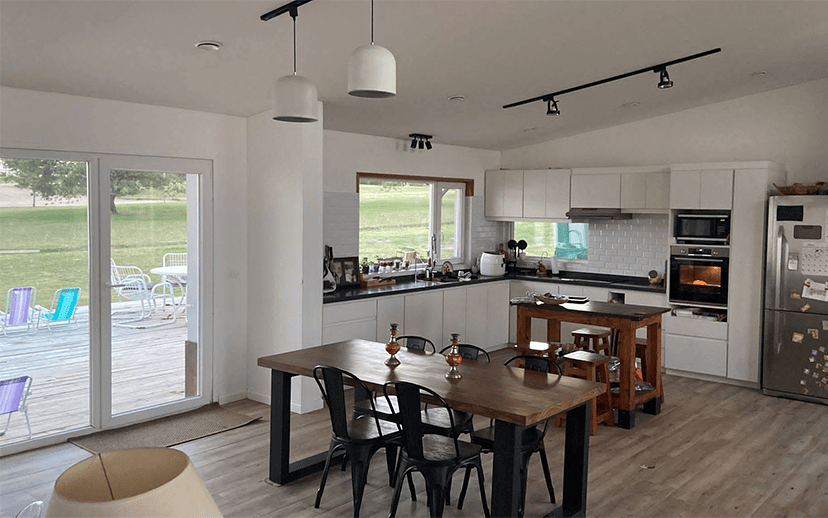
Casa SG Mas Alba: Passivhaus Classic home

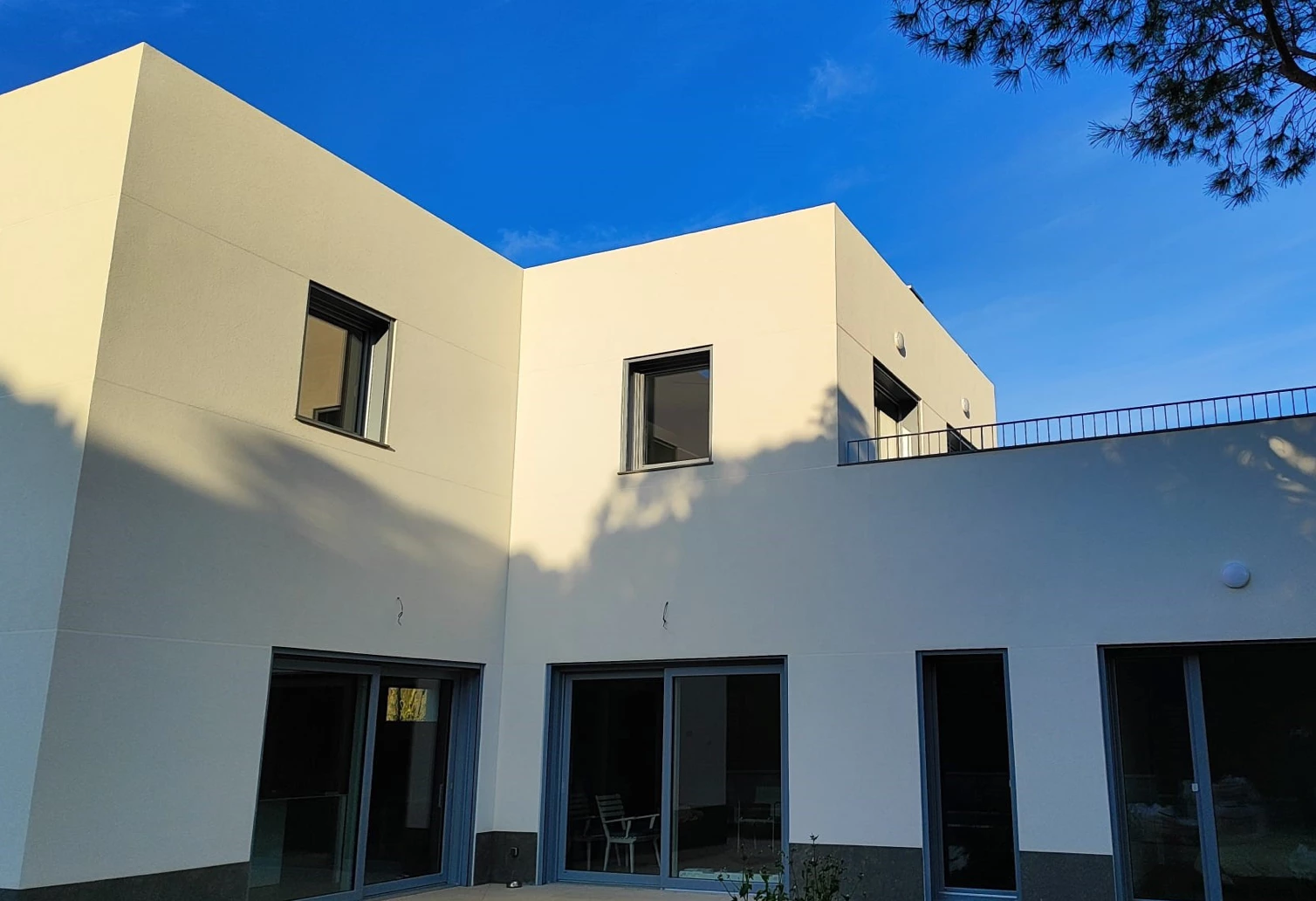
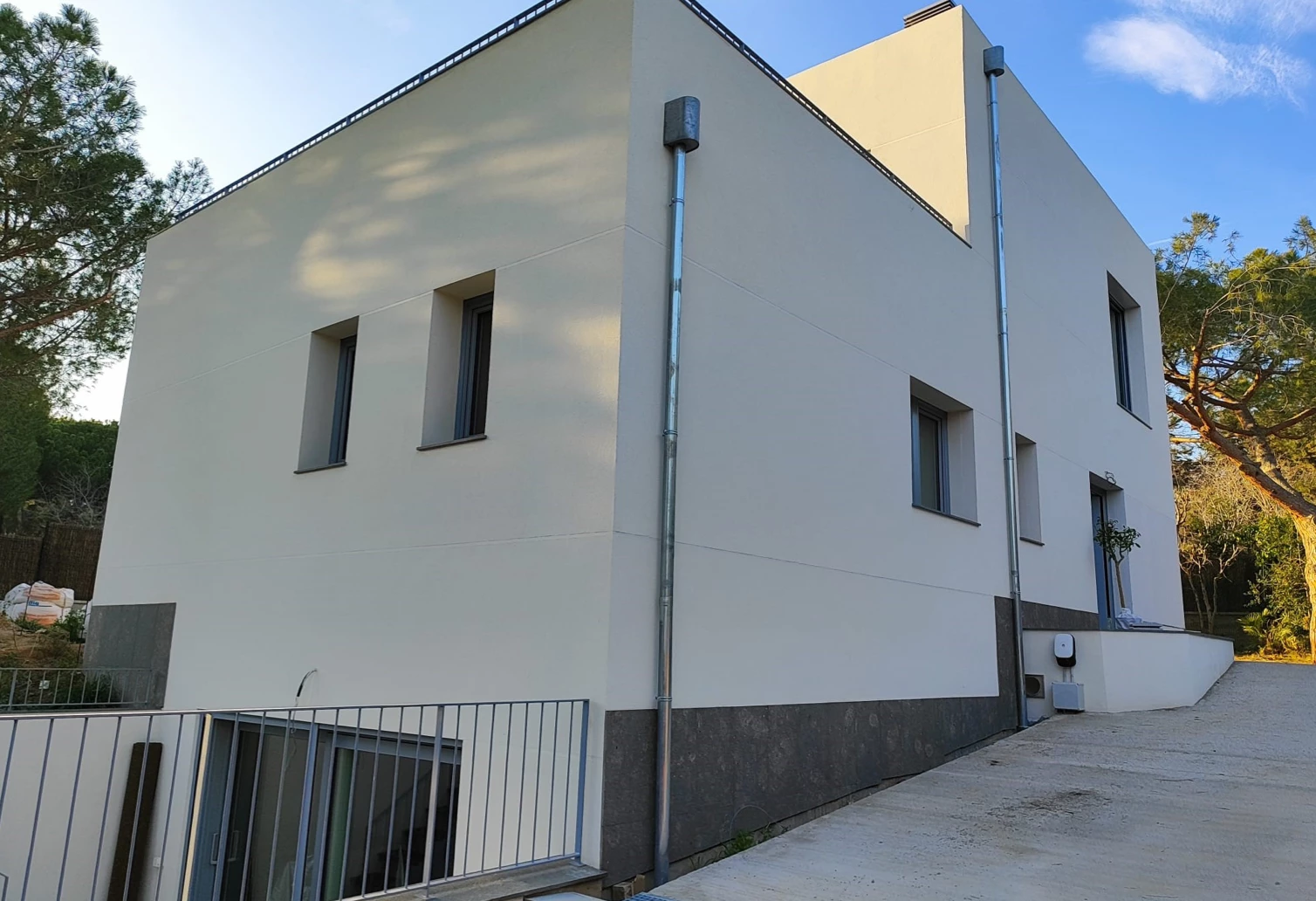
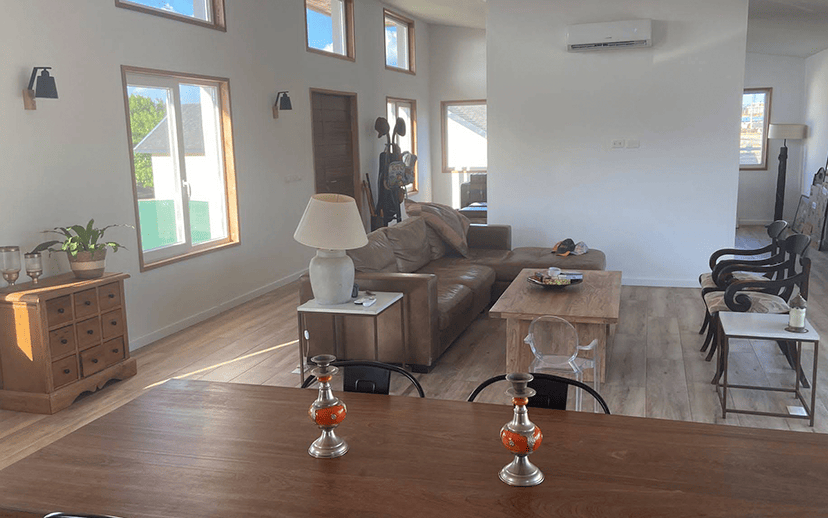
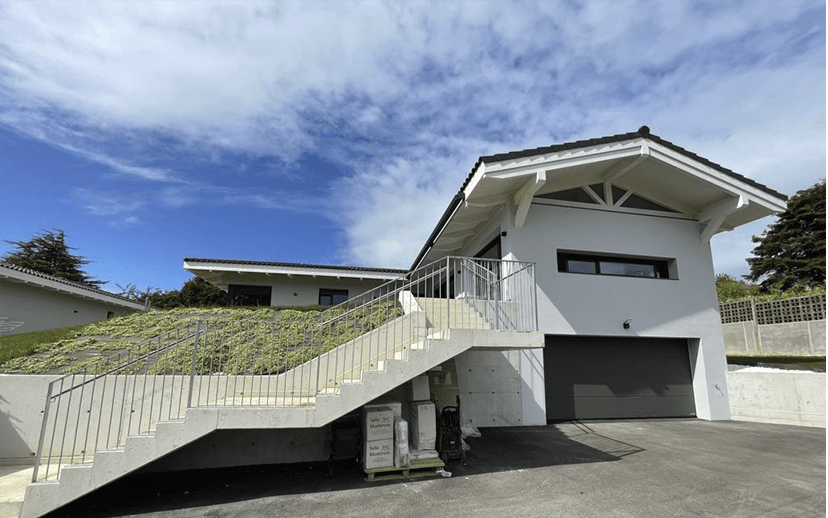
Sg Mas Alba is a single-family home located in Sant Pere de Ribes, on a steeply sloped plot, which defines the design of the house on two levels

Casa SG Mas Alba: Passivhaus Classic Home

Passivhaus Certification

Praxis cabecera proyectos

Description

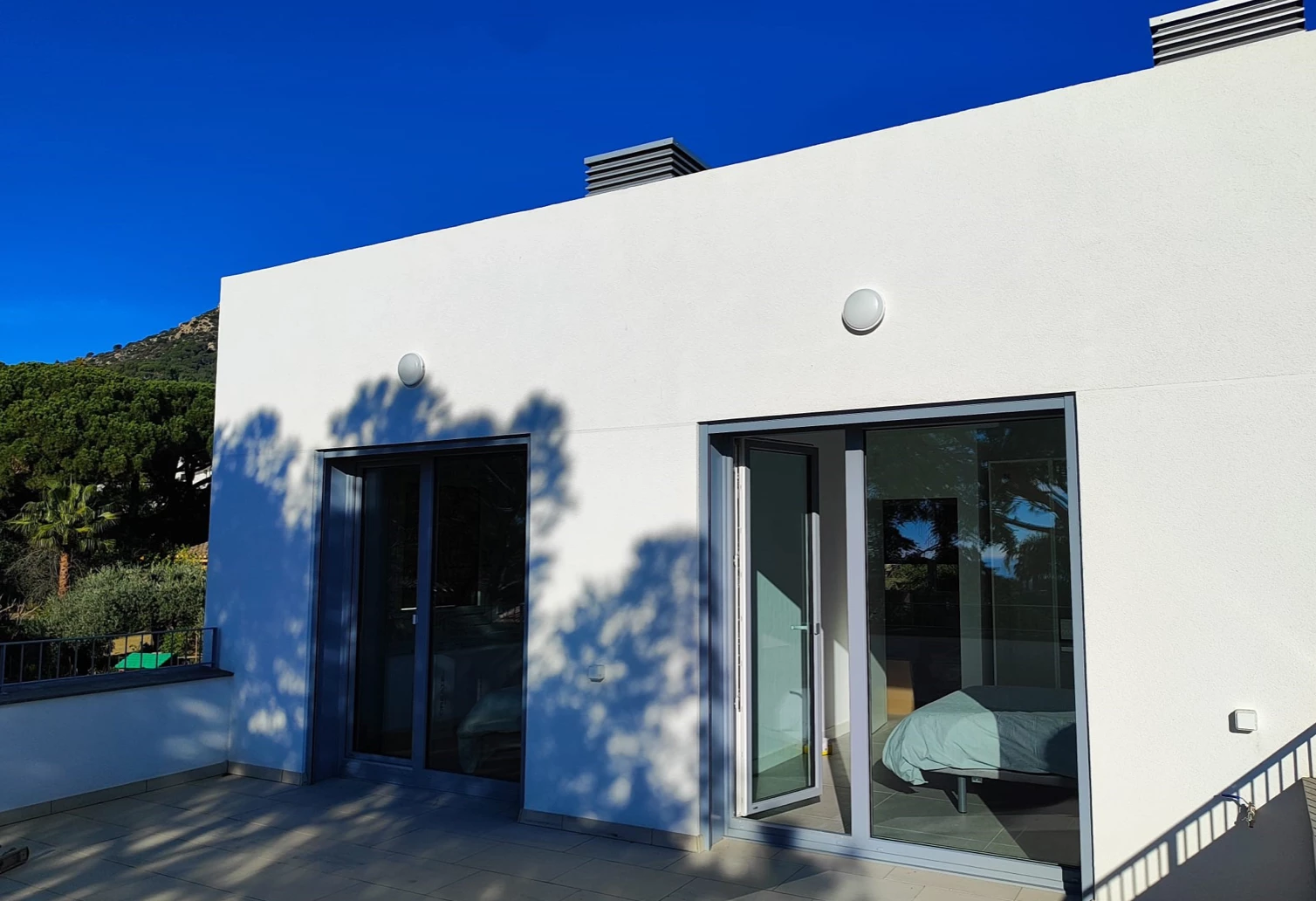
Sg Mas Alba is a single-family home located in Sant Pere de Ribes, on a steeply sloped plot, which defines the design of the house on two levels: the first floor, where the main access and daytime areas are located, and the ground floor, open to the garden, where the bedrooms are located.

The house was designed by the SG Arq architecture practice and certified by Oliver Style of Praxis Resilient Buildings as Passivhaus Classic.

Outer walls are made of honeycomb ceramic brick, insulated with external insulation. The terraces and flat roofs are made of concrete slabs, insulated with XPS insulation. The light external colours of the walls and roofs increase the reflection of solar radiation in the summer and reduce cooling demand- a typical vernacular passive strategy throughout the Mediterranean.

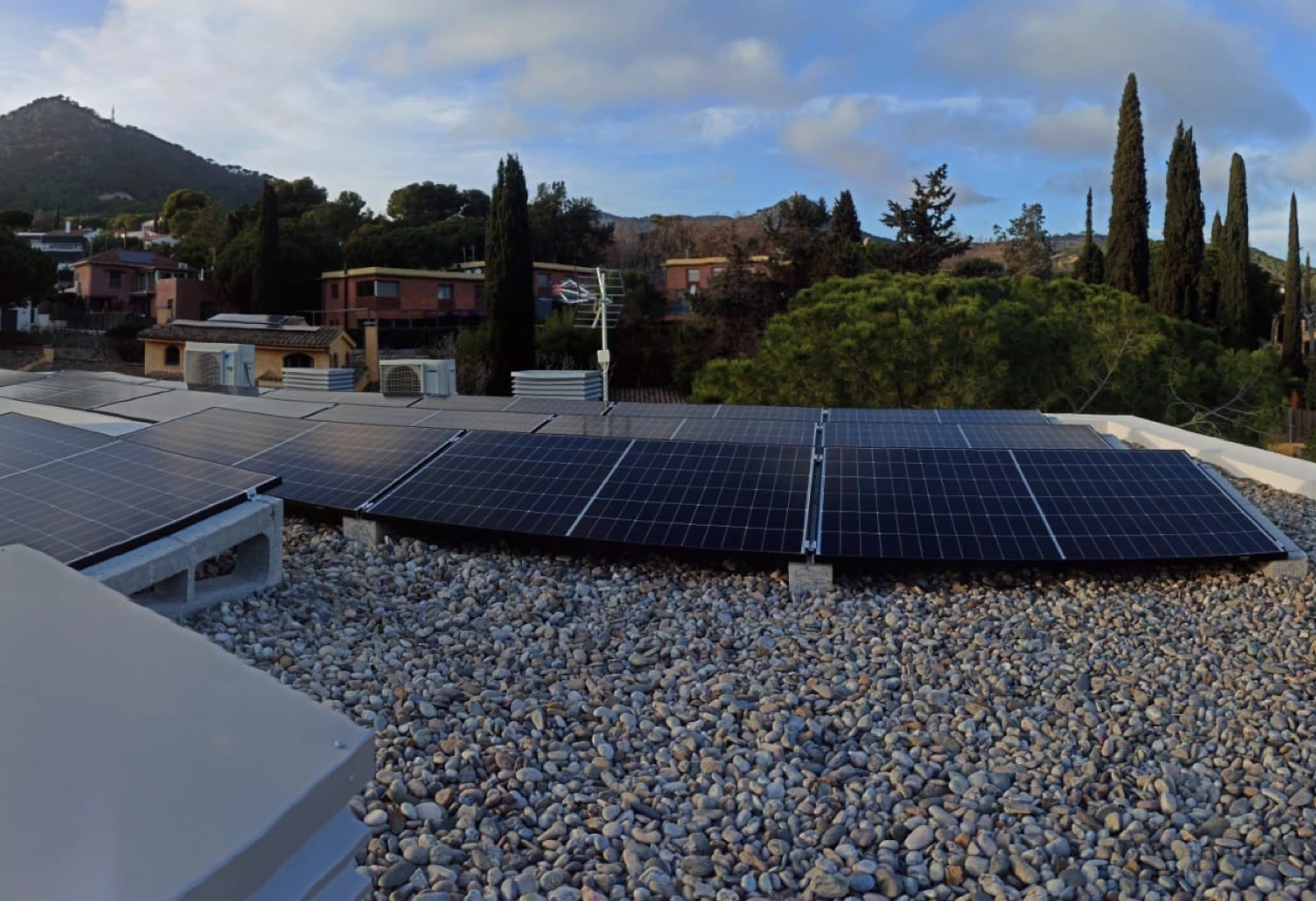
The windows include PVC frames with double glazing and external venetian blinds with adjustable slat angles for controlling solar gains. A Zehnder mechanical ventilation system with heat and humidity recovery provides optimum air quality and removal of excess humidity. Heating and cooling are provided by an air-source heat pump and indoor ducted split units. Domestic hot water is generated by a high-efficiency air-to-water heat pump, both made by Panasonic.

Links:

PEP

iPHa

Photos: Sg Arq

  • Year: 2025
  • Location: Sant Pere de Ribes, Barcelona, España
  • Architecture: Sg Arq
  • Services provided by Praxis: Passivhaus Certification
  • Passivhaus Certification Class: Passivhaus Classic
  • Climate zone: Warm
  • Floor area: 113 m2
  • Thermal envelope area: 470 m2
  • Blower Door Result: 0,42 n50
  • Heating Demand: 10 kWh/m2·a
  • Cooling Demand: 14 kWh/m2·a
  • Primary Energy Renewable consumption (EPR): 46 kWh/m2·a
  • Final Energy consumption: 37 kWh/m2·a
  • Renewable energy generation: 0 kWh/m2·a
  • CO2eq emissions: 13 kg/m2·a

Casa SG Joaquim: Passivhaus Plus

Description Casa SG Joaquim is a Passivhaus Plus certified home, designed by architect and Passivhaus Designer Sergi Gargallo of SgARQ Passivhaus Architecture, and certified by Oliver Style of Praxis Resilient Buildings. This terraced home has a façade to the main street and the interior patio to the rear of the property.  The building consists of …

Casa SG Joaquim: Passivhaus Plus

Passivhaus

Praxis cabecera proyectos

Description

Casa SG Joaquim is a Passivhaus Plus certified home, designed by architect and Passivhaus Designer Sergi Gargallo of SgARQ Passivhaus Architecture, and certified by Oliver Style of Praxis Resilient Buildings. This terraced home has a façade to the main street and the interior patio to the rear of the property. 

The building consists of a ground floor and a first floor with an accessible roof terrace, garden and swimming pool. External walls are insulated with 100mm of external insulation, eliminating structural thermal bridges, with 200mm of thermal insulation on the roofs. 

High-performance windows and a very low level of air leaks- tested on-site with a Blower Door test- reduce heat losses in winter and heat gains in the summer, keeping the house comfortable with minimal energy consumption.  

The home has a whole house balanced mechanical ventilation system with heat and humidity recovery, with a Zehnder ComfoairQ 350 ERV unit, certified as a Passivhaus component for hot climates. To reach Passivhaus Plus, 18 solar photovoltaic panels were installed on the roof, forming a 6.7 kWp array. PHPP energy modelling indicated the home will have an annual consumption of around 4282 kWh/a, with an on-site photovoltaic generation of around 7903 kWh/a.

Links:

PEP (Plataforma Edificación Passivhaus)

iPHa (Base de datos internacional de proyectos Passivhaus)

Photos: Joan Giribet

  • Year: 2022
  • Location: Vilanova i la Geltrú, Catalonia, Spain
  • Architecture: SGArq Passivhaus Architecture
  • Services provided by Praxis: Passivhaus Certification
  • Passivhaus Certification Class: Passivhaus Plus
  • Climate zone: Warm Temperate
  • Floor area: 149 m2
  • Thermal envelope area: 475 m2
  • Blower Door Result: 0,6 n50
  • Heating Demand: 14 kWh/m2·a
  • Cooling Demand: 17 kWh/m2·a
  • Primary Energy Renewable consumption (EPR): 36 kWh/m2·a
  • Final Energy consumption: 29 kWh/m2·a
  • Renewable energy generation: 66 kWh/m2·a
  • CO2eq emissions: 15 kg/m2·a

Bitoriano Etxea: Passivhaus Plus home

Description Praxis has carried out Passivhaus Plus certification for this semi-detached single-family home in Bitoriano, Álava, designed by architect and Passivhaus Designer Marçal Bonadona Berdala. The house has two floors with a treated floor area of 117 m². Built with a lightweight timber frame system, the walls have 24 cm of external insulation, 14.5 cm …

Bitoriano Etxea: Passivhaus Plus home

Passivhaus Certification

Praxis cabecera proyectos

Description

Praxis has carried out Passivhaus Plus certification for this semi-detached single-family home in Bitoriano, Álava, designed by architect and Passivhaus Designer Marçal Bonadona Berdala.

The house has two floors with a treated floor area of 117 m². Built with a lightweight timber frame system, the walls have 24 cm of external insulation, 14.5 cm between the structure and 4.5cm in the service void. The roof has a total of 28.5 cm of insulation. Ecoven Plus S82 windows were used, along with argon filled low-emissivity triple glazing.

The ventilation system includes a WOLF CWL-2 325 heat recovery unit. Heating and cooling is provided by a radiant floor system with support from fan coils, powered by a Panasonic Aquarea KIT-ADC09JE5C-1 heat pump, which also produces domestic hot water.

The home achieved a blower door test result of n50 = 0.4 air changes per hour (ACH).

On the roof, 13 photovoltaic panels have been installed, generating around 6,000 kWh/year.

Links:

PEP (Plataforma Edificación Passivhaus)

iPHa (Base de datos internacional de proyectos Passivhaus)

Photos: Marçal Bonadona

  • Year: 2022
  • Location: Calle Iturribide, Bitoriano (Álava), Spain
  • Architecture: Marçal Bonadona Berdala
  • Services provided by Praxis: Passivhaus Certification
  • Passivhaus Certification Class: Passivhaus Plus
  • Climate zone: Warm Temperate
  • Floor area: 117 m2
  • Thermal envelope area: 498 m2
  • Blower Door Result: 0,4 n50
  • Heating Demand: 14 kWh/m2·a
  • Cooling Demand: 3 kWh/m2·a
  • Primary Energy Renewable consumption (EPR): 39 kWh/m2·a
  • Final Energy consumption: 32 kWh/m2·a
  • Renewable energy generation: 55 kWh/m2·a
  • CO2eq emissions: 17 kg/m2·a

Bellcaire: PHI Low Energy Building

Description Located in Bellcaire d’Empordá, Catalonia, this single-family home was certified by Oliver Style as a PHI Low Energy Building. Designed by Gemma Blanes and Marina Farró from HEM Green & Balanced Architecture, and built by Evowall, the home has a compact triangular shape that takes advantage of the greater height to create two floors …

Bellcaire: PHI Low Energy Building

Passivhaus Certification, Blower Door test, Thermal bridge calculations

Praxis cabecera proyectos

Description

Located in Bellcaire d’Empordá, Catalonia, this single-family home was certified by Oliver Style as a PHI Low Energy Building. Designed by Gemma Blanes and Marina Farró from HEM Green & Balanced Architecture, and built by Evowall, the home has a compact triangular shape that takes advantage of the greater height to create two floors and a double-height space in the sitting and dining room area of the house, adding spaciousness. The outdoor area features a pergola for shading in the summer months, adding a dynamic element to the building structure.

The home was built using the Evowall prefabricated steel-frame system, with a patented low-conductivity mortar and EPS and PIR insulation.

The pine timber windows frames are made by Unilux, with argon filled low emissivity double glazing, and traditional “Alicantina” shutters.

A Zehnder ComfoAir 180 balanced mechanical ventilation system with heat recovery provides comfort ventilation.

Heating and cooling are provided by an LG air-to-air heat pump with indoor ducted units. For domestic hot water, a Thermor Aeromax Split heat pump was used. Passivhaus certification was carried out by Praxis Resilient Buildings.

Links:

PEP (Plataforma Edificación Passivhaus)

iPHa (Base de datos internacional de proyectos Passivhaus)

  • Year: 2023
  • Location: Bellcaire d’Empordá, Girona, España
  • Architecture: HEM – Gemma Blanes / Marina Farró
  • Services provided by Praxis: Passivhaus Certification, Blower Door test, Thermal bridge calculations
  • Passivhaus Certification Class: PHI Low Energy Building
  • Climate zone: Warm
  • Floor area: 114 m2
  • Thermal envelope area: 481 m2
  • Blower Door Result: 0,8 n50
  • Heating Demand: 30 kWh/m2·a
  • Cooling Demand: 11 kWh/m2·a
  • Primary Energy Renewable consumption (EPR): 53 kWh/m2·a
  • Final Energy consumption: 42 kWh/m2·a
  • Renewable energy generation: 0 kWh/m2·a
  • CO2eq emissions: 22 kg/m2·a

Paraparamu: Passivhaus Classic, New Zealand

Description The McKinlay Residence is located in the Kāpiti Coast District, Paraparamu, on the North Island of New Zealand. The home was designed by architect Ross Bennett, with Passivhaus consultancy done by Maria Rei of eHaus, and certified Passivhaus Classic by Oliver Style of Praxis Resilient Buildings. This single-story, detached family home has a treated …

Paraparamu: Passivhaus Classic home, New Zealand

Passivhaus Certification

Praxis cabecera proyectos

Description

The McKinlay Residence is located in the Kāpiti Coast District, Paraparamu, on the North Island of New Zealand. The home was designed by architect Ross Bennett, with Passivhaus consultancy done by Maria Rei of eHaus, and certified Passivhaus Classic by Oliver Style of Praxis Resilient Buildings.

This single-story, detached family home has a treated floor area of 146 m² and was built using a lightweight timber frame system, with 140 mm of Eco Knauf insulation in the exterior walls, and 210 mm of insulation in the roof. Gealan Eco certified PVC windows were used, with low emissivity argon filled triple glazing.

The blower door test for this home achieved an excellent result of n50 = 0.27 air changes per hour (ACH).

Ventilation is provided by a Zehnder ComfoAir Q350 HRV unit with whole house balanced mechanical ventilation with heat recovery. A Panasonic split system is used for heating and cooling, and a Stiebel Eltron unit produces domestic hot water. Passivhaus certification was carried out by Praxis Resilient Buildings.

Links:

iPHa (Base de datos internacional de proyectos Passivhaus)

  • Year: 2022
  • Location: Datum Way, Paraparamu, New Zealand
  • Architecture: eHaus – Ross Bennett
  • Services provided by Praxis: Passivhaus Certification
  • Passivhaus Certification Class: Passivhaus Classic
  • Climate zone: Warm temperate
  • Floor area: 146 m2
  • Thermal envelope area: 558 m2
  • Blower Door Result: 0,3 n50
  • Heating Demand: 15 kWh/m2·a
  • Cooling Demand: 0 kWh/m2·a
  • Primary Energy Renewable consumption (EPR): 47 kWh/m2·a
  • Final Energy consumption: 33 kWh/m2·a
  • Renewable energy generation: 0 kWh/m2·a
  • CO2eq emissions: 18 kg/m2·a

Casa Sg Magi, Sitges: EnerPHit Plus

Casa SG Magi: a deep energy retrofit in Sitges

Casa Sg Magi, Sitges: EnerPHit Plus

Passivhaus Certification

Praxis cabecera proyectos

Description

Casa SG Magi: EnerPHit Plus deep energy retrofit in Sitges

Designed by Sergi Gargallo from the SgARQ Passivhaus Architecture and certified by Oliver Style from Praxis Resilient Buildings, this single-family home has achieved the EnerPHit Plus certification, thereby reducing the home’s energy consumption by around 90%.

Consisting of ground floor and first, the house has a useful floor area of 82 m². Outer walls are fitted with 120mm of EPS external thermal insulation (ETICS), with 200 mm of XPS insulation on the roof and 100 mm on the floor slab. The Blower Door test result was n50 = 0.69 air changes per hour (ach), well below the EnerPHit límit of n50 = 1 ach. An existing home in Spain typically has an air permeability of around n50 = 10 ach.

The windows consist of WERU Afino One PVC frames, with triple-glazed low-emissivity windows filled with argon gas.

A Zehnder Comfoair Flex 250 sensible heat recovery unit takes care of mechanical ventilation.

Space heating and cooling consists of two Panasonic CU-Z25UBEA air-to-air heat pumps, one on each floor (2 x 2.5 kW for cooling and 2 x 3.2 kW for heating), with ducted indoor split units.

Nine roof mounted 455 Wp photovoltaic panels produce around 32% more energy than the home consumes.

Praxis undertook the Passivhaus audits and certification for the project, as well as completing the 2D thermal bridge calculations to ISO 10211, assessing heat loss and minimum temperatures in all the construction details.

Links:

PEP- (Spanish Passivhaus Platform)
iPHa– (International Passivhaus Projects Database)

Photos: Juan Giribet de Sebastián

  • Year: 2023
  • Location: Sitges, Catalonia, Spain
  • Architecture: SgARQ Passivhaus Architecture
  • Services provided by Praxis: Passivhaus Certification, thermal bridge calculations
  • Passivhaus Certification Class: EnerPHit Plus
  • Climate zone: Warm
  • Floor area: 82 m2
  • Thermal envelope area: 347m2
  • Blower Door Result: 0,69 n50
  • Heating Demand: 16 kWh/m2·a
  • Cooling Demand: 21 kWh/m2·a
  • Primary Energy Renewable consumption (EPR): 61 kWh/m2·a
  • Final Energy consumption: 49 kWh/m2·a
  • Renewable energy generation: 83 kWh/m2·a
  • CO2eq emissions: 26 kg/m2·a

Casa SgCosta: Passivhaus Plus home, Sitges

liver Style of Praxis Resilient Buildings has carried out the Passivhaus Plus certification of this single-family home in Sitges, Catalonia, designed by the architect and Passivhaus Designer Sergi Gargallo of SgARQ Passivhaus Architecture.

Casa Sg Costa

Passivhaus

Praxis cabecera proyectos

Description

Oliver Style of Praxis Resilient Buildings has carried out the Passivhaus Plus certification of this single-family home in Sitges, Catalonia, designed by the architect and Passivhaus Designer Sergi Gargallo of SgARQ Passivhaus Architecture.

During the Passivhaus certification process, Praxis audited the calculations and design documents presented by the Passivhaus Designer, including the PHPP energy model, thermal bridge calculations, architectural and HVAC drawings and reports, the Blower Door test report, the ventilation commissioning report, and photographic documentation of the construction process, to ensure that the building was built as designed and as calculated in the PHPP model.

Photos: Joan Giribet

More information about the project in our Blog article: https://praxis-rb.com/casa-sg-costa-passivhaus-plus-en-clima-calido/

Links:

International Passivhaus Projects database

Spanish Passivhaus Platform (PEP) project database

Year: 2022

Location: Sitges, Cataluña

Services:
Passivhaus certification

Casa Sg Garona: Low Energy Building

Single-family home in Sant Pere de Ribes, south of Barcelona, designed by Sergi Gargallo from the SgARQ Passivhaus Architecture and certified by Oliver Style from Praxis Resilient Buildings as a PHI Low Energy Building.

Casa Sg Garona: Low Energy Building

Passivhaus Certification

Praxis cabecera proyectos

Description

Single-family home in Sant Pere de Ribes, south of Barcelona, designed by Sergi Gargallo from the SgARQ Passivhaus Architecture and certified by Oliver Style from Praxis Resilient Buildings as a PHI Low Energy Building.

The home, over a ground floor and first, has a treated floor area of 135 m2. Outer walls are insulation 100mm of mineral wool insulation, with 150mm of XPS insulation on the roof and 100mm on the floor slab.

The windows consist of WERU Afino One PVC frames, with triple-glazed low-emissivity windows filled with argon gas.

The Blower Door test result was n50 = 0.6 air changes per hour (ach), well below the PHI Low Energy Building limit of n50 = 1 ach.

Mechanical ventilation with heat recovery is taken care of with a JAGA Orcon HRC-350-MaxComfort unit.

A Samsung air-to-water heat pump with indoor ducted fan coil units provides heating and cooling. The same heat pump generates domestic hot water.

12 roof mounted 350 Wp photovoltaic panels produce around 60% of the energy that the home consumes.

Praxis did the Passivhaus certification, which included a detailed revision of the architectural and HVAC design documentation, the PHPP and thermal bridge calculations, the Blower Door test report, the ventilation system commissioning, and construction photographs, to ensure that the Passivhaus Low Energy Building criteria were met, both on paper and in real life.

Links:

PEP (Spanish Passivhaus Platform)
iPHa (International Passivhaus Projects Database)

Photos: Joan Giribet

  • Year: 2023
  • Location: Sant Pere de Ribes, Barcelona
  • Architecture: SgARQ Passivhaus Architecture
  • Services provided by Praxis: Passivhaus Certification
  • Passivhaus Certification Class: PHI Low Energy Building
  • Climate zone: Warm
  • Floor area: 135 m2
  • Thermal envelope area: 583 m2
  • Blower Door Result: 0,6 n50
  • Heating Demand: 25 kWh/m2·a
  • Cooling Demand: 26 kWh/m2·a
  • Primary Energy Renewable consumption (EPR): 72 kWh/m2·a
  • Final Energy consumption: 60 kWh/m2·a
  • Renewable energy generation: 36 kWh/m2·a
  • CO2eq emissions: 22 kg/m2·a

Terrassa Haus: multi-family Passivhaus Classic

Terrassa Haus is the first multi-residential building to receive Passivhaus certification in the city of Terrasa, Catalonia, Spain. The project was developed by Cambolico and designed by architects Antoni Espona & Xavier Torcal. Oliver Style and Bega Clavero from Praxis Resilient Buildings carried out the Passivhaus consultancy, HVAC design and Blower Door testing.

Terrassa Haus

Passivhaus Consultancy

Praxis cabecera proyectos

Description

Terrassa Haus is the first multi-residential building to receive Passivhaus certification in the city of Terrasa, Catalonia, Spain. The project was developed by Cambolico and designed by architects Antoni Espona & Xavier Torcal. Oliver Style and Bega Clavero from Praxis Resilient Buildings carried out the Passivhaus consultancy, HVAC design and Blower Door testing. The building achieved Passivhaus Classic certification.  

The ground floor offers 2 commercial spaces, with a further three floors with apartments ranging from 76 m2 to 154 m2. The building has a total floor area of 1142m2 and includes a communal co-working space, bike room, gym, and communal pool.

With an existing concrete structure that had been abandoned during the economic crisis of 2007, an external thermal insulation system with EPS insulation was applied over ceramic brick and rendered, with a further 5cm of Knauf Insulation mineral wool inside in the service void. The roof is insulated with XPS insulation. Rehau PVC windows frames with argon-filled low-e coated glazing make up the openings, with Swisspacer insulated glazing spacers. The window frames are installed with Iso-Top Winframer high density EPS pre-frames, to further reduce heat loss.

Heating, cooling and hot water is provided by individual Hitachi all-in-one heat pumps in each apartment. Similarly, mechanical ventilation with heat recovery is provided by individual Soler & Palau Passivhaus certified ventilation units, with intake air drawn in from the façade walls and stale air extracted to the roof with shared extract ducts.

Links:

PepiPHA

Photos: Terrassa Haus

  • Year: 2023
  • Location: Terrassa, Barcelona, España
  • Architecture: Antoni Espona & Xavier Torcal
  • Services provided by Praxis: Passivhaus Consultancy, thermal bridge calculations, building physics, heating-cooling-DHW-ventilation system design, Blower Door airtightness tests
  • Passivhaus Certification Class: Passivhaus Classic
  • Floor area: 1.142 m2
  • Thermal envelope area: 1.500 m2
  • Blower Door result: 0,6 n50
  • Heating Demand: 10 kWh/m2·a
  • Cooling Demand: 15 kWh/m2·a
  • Primary Energy Renewable consumption (EPR): 60 kWh/m2·a
  • Final Energy consumption: 50 kWh/m2·a
  • Renewable energy generation: 0 kWh/m2·a
  • CO2eq emissions: 18 kg/m2·a

Mirador de Gràcia: Passivhaus Nursing home

Consultoría Passivhaus para una residencia geriátrica asistida ubicada en Barcelona capital, diseñada por el despacho de arquitectura Genars y promovido por FIATC Seguros a través de FIATC Residencias (Inverfiatc).

Mirador de Gràcia: Passivhaus Care home

Passivhaus

Praxis cabecera proyectos

Description

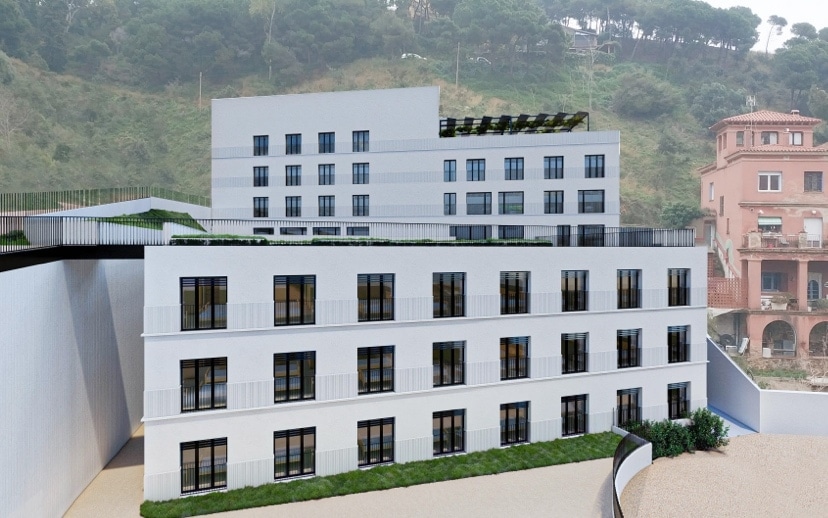
Passivhaus consultancy for an elderly people residence located in Barcelona capital, designed by Genars architecture studio and developed by FIATC Seguros through FIATC Residencias (Inverfiatc). This 6575 m2 building is in the process of Passivhaus Classic certification.

Praxis has delivered the PHPP modelling, design of the thermal envelope and airtight layer, advice on low-impact materials, and analysis and optimisation of thermal bridges and construction details.

We’ve also undertaken a thermodynamic and daylighting study of the building, using DesignBuilder (EnergyPlus & Radiance), to assess natural light levels and analyse the risk of summer overheating.

Our work has also included an audit of the mechanical and electrical systems, with proposals for improvements and compliance with the Passivhaus standard, to ensure efficient operation and low maintenance costs. Praxis has also undertaken the Blower Door testing and on-site Passivhaus supervision and quality control.
Photos: Salva Lopez y Miriam Castells

Links:

Passive House Database iPHa

Base de datos de proyectos Passivhaus PEP

  • Year: 2024
  • Location: Barcelona, España
  • Architecture: Joaquim Rigau – Genars
  • Services provided by Praxis: Passivhaus design & consultancy, thermodynamic simulation, daylighting analysis, HVAC consultancy, Blower Door testing, site supervision
  • Passivhaus Certification Class: Passivhaus Classic
  • Climate zone: Warm
  • Floor area: 4595 m2
  • Thermal envelope area: 6880 m2
  • Blower Door Result: 0,64 n50
  • Heating Demand: 11 kWh/m2·a
  • Cooling Demand: 10 kWh/m2·a
  • Primary Energy Renewable consumption (EPR): 53 kWh/m2·a
  • Final Energy consumption: 60 kWh/m2·a
  • Renewable energy generation: 61 kWh/m2·a
  • CO2eq emissions: 32 kg/m2·a